The honeybee native to our region is the old Irish black bee Apis mellifera mellifera. This is a strain of the honeybee species Apis mellifera that has evolved to suit the ecological conditions of the region.
We now have a lot more information on what honey bees we have in Ireland including the fact that Ireland now has probably the biggest pure population remaining of the black bee subspecies. Our honey bee in Ireland is distinct in physical make up, behaviour and genetics and the importing of non-native types of bees and commercial strains puts at risk thousands of years of evolution and the ability of neighbouring beekeepers to maintain their pure stocks. It would be a shame if we lost our native bee due to beekeepers not knowing basic information and ordering bees online from abroad. For more information on native Irish honey bees. read this report by Prof Grace P McCormack, Zoology, School of Natural Sciences, University of Galway: 'Honey bees in Ireland - 'Think before you buy'
In October 2018 members voted to designate the region a “Voluntary Conservation Area (VCA)” for the native Irish black bee. Increasingly beekeeping associations throughout the country, both north and south, are designating their areas as VCAs. Through this approach it is hoped that the message will go to governments and to the EU that the appropriate action to conserve the threatened native black bee is to introduce a ban on the importation of honeybees into the island of Ireland.
However, we have gone much further and our Association has taken a unique initiative and in last two decades has been discouraging the importation of bees from all sources into our catchment area. Since 2000 we have been encouraging members to raise or source honeybees within our area to minimise disease transmission into Fingal and to conserve the native honeybee. The purity of the native bee has been improving and the bees have a much gentler nature.
Furthermore, the vast majority of our beekeepers no longer use chemicals to treat their bees against the exotic varroa mite that has devastated honeybees globally. Through discouraging the importation of bees into the region and members raising their own bees, as already mentioned, and ceasing the use of chemical treatments our native honeybees have developed a tolerance to the mite which is no longer a serious threat.
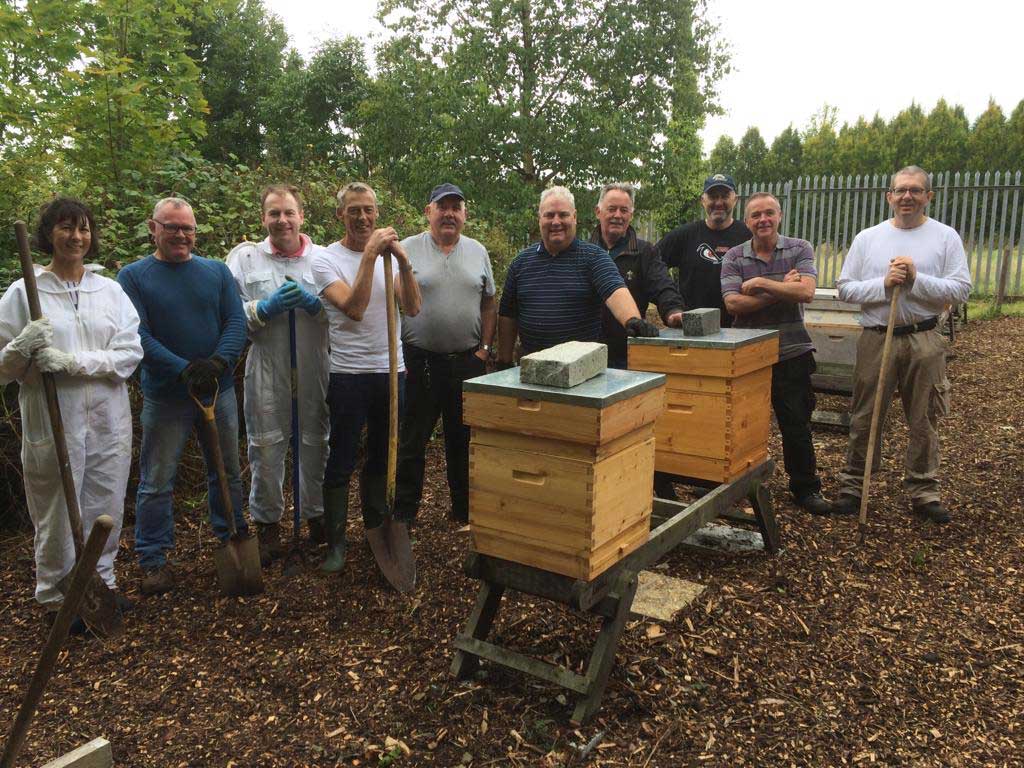
Conserving the native species and building it up to sustainable numbers requires the existence of beekeepers and the availability of suitable forage. There is resurgence in beekeeping in Ireland and particularly in the Fingal region. This is largely due to greater public awareness of the role of honeybees as pollinators.
There is significant economic benefit from the pollination of commercial crops such as oil seed rape, top and soft fruit, but arguably the most benefit is from the pollination of our wild plants. The flora and fauna of the country benefit from this pollination and without it the wide-range of seasonal colour in the countryside would largely disappear. Bees, honeybees / bumblebees / solitary bees, along with hoverflies make up the bulk of the pollinating insects.